
Digital Detox Islands in Japan
Where forest bathing is medicine and silence is an art form centuries in the making.
Why Japan for a Digital Detox
Japan is the country that invented the Walkman, the Game Boy, and the smartphone-addicted commuter train, yet it is also the country that formalized the practice of shinrin-yoku, forest bathing, as a public health intervention and built an entire aesthetic philosophy around the beauty of impermanence and imperfection. This contradiction is not a paradox; it is a cultural muscle memory. The Japanese islands that exist beyond the neon corridors of Tokyo and Osaka carry within them an ancient technology for calming the nervous system that predates every app, every notification, every dopamine-hijacking algorithm by millennia. On Yakushima, where cedar trees have been growing since before the Roman Empire, the forest itself becomes a kind of operating system: it regulates your breathing, slows your heart rate, and runs a program of sensory immersion so sophisticated that the concept of checking your phone becomes not just unnecessary but faintly absurd, like bringing a flashlight to stare at the sun.
The Japanese concept of wabi-sabi, the aesthetic of imperfect, incomplete, and impermanent things, provides the philosophical architecture for a digital detox that goes deeper than simply turning off your phone. Digital culture is predicated on the pursuit of perfection: the filtered photo, the optimized feed, the flawless personal brand. Wabi-sabi inverts this entirely. On Naoshima, where contemporary art installations are embedded in the landscape of an old fishing village, you encounter Tadao Ando's concrete meditation spaces and James Turrell's light rooms that do not ask you to document them but to sit within them and allow your perception to dissolve. The island operates on the principle that attention itself is the art, that the quality of your looking determines the quality of your seeing. After an hour in the Chichu Art Museum, built almost entirely underground to preserve the island's skyline, you emerge blinking into sunlight with the strange realization that you have been fully present for sixty consecutive minutes, perhaps for the first time in years.
What seals Japan's power as a digital detox destination is the onsen, the hot spring tradition that turns the simple act of bathing into a ritual of surrender. On Yakushima, natural hot springs bubble up among the coastal rocks, and you lower yourself into mineral-rich water while watching the Pacific swell against boulders older than civilization. There is an etiquette to onsen bathing: you wash before entering, you do not speak loudly, you do not bring devices, you do not rush. This etiquette is not a rule imposed from outside; it emerges organically from the recognition that certain experiences demand your full, unmediated presence. The Japanese mastered the art of doing nothing, what they call boketto, the act of gazing vacantly into the distance without thinking, long before the rest of the world realized it might be necessary. On these islands, you do not detox from technology. You remember what your senses were designed for.
Islands in Japan
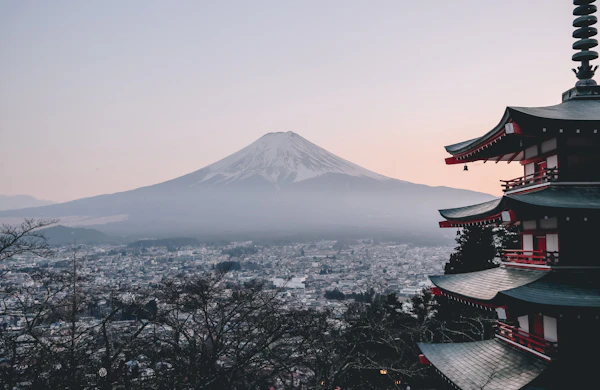
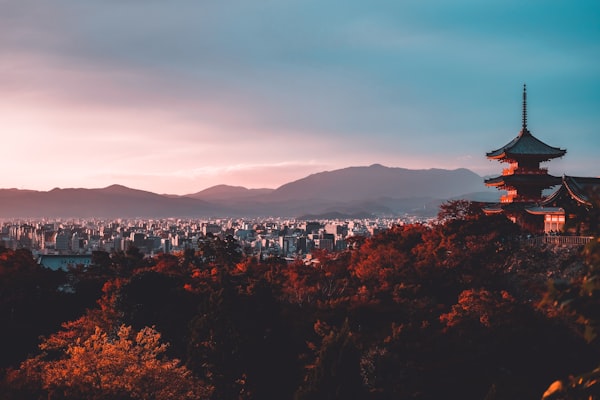
Find your island in Japan.
Take our quiz to find the perfect contemplative island for your nervous system.
Take the Island Quiz