
Digital Detox Islands in the Philippines
Seven thousand islands, and the quietest ones don't have hashtags yet.
Why the Philippines for a Digital Detox
The Philippines is an archipelago of 7,641 islands at last count, though the number shifts with the tides and the cartographers' patience. Of those thousands, only a fraction have been claimed by tourism. The rest remain as they have been for centuries: fringed with coconut palms whose roots drink from both fresh water and salt, wrapped in mangrove forests that breathe with the rhythm of the moon, and populated by communities whose daily routines are governed not by calendar apps but by the movement of fish, the direction of wind, and the particular shade of orange the sky turns before a typhoon. To arrive on one of these quieter islands is to feel the digital world recede not with the drama of a deliberate renunciation but with the soft inevitability of a tide going out. The signal simply thins, then vanishes, and what remains is the sound of water on hull, of roosters at dawn, of children laughing somewhere behind the coconut trees.
Siargao sits in the Caraga region of Mindanao's northeastern coast, a teardrop-shaped island that surfers discovered in the 1980s and that the rest of the world is only now beginning to find. But Siargao's genius, from a detox perspective, lies in what it has not yet become. Unlike Boracay, which was famously shut down by the government in 2018 for ecological rehabilitation after over-tourism, Siargao still moves at the tempo of island time. The local surf culture here predates Instagram by decades; the original riders paddled out on wooden boards carved by hand, and the best breaks are still reached not by jet ski but by banca — the narrow outrigger canoe that is the Philippines' oldest and most elegant form of transport. There are pockets of Wi-Fi in the main town of General Luna, but venture ten minutes down any dirt road by motorbike and the connection drops away like a rope you did not realize you were clutching.
Filipino hospitality — a warmth so genuine it can startle visitors from more transactional cultures — is itself a form of nervous system medicine. The concept of pakikisama, roughly translated as communal harmony, means that on a Philippine island you are not a consumer checking into an experience; you are a guest being woven into a fabric. A fisherman will invite you to share his catch without expecting payment. A grandmother will press a bag of calamansi limes into your hand because your skin looks like it needs the sun. The coconut forests of Siargao, dense and cathedral-tall, filter the light into something green and liquid, and walking through them barefoot on the soft earth feels less like exercise and more like a conversation with gravity. This is the simplicity that your nervous system has been asking for — not the curated minimalism of a design magazine but the real, warm, imperfect simplicity of a life lived close to the ground.
Islands in the Philippines
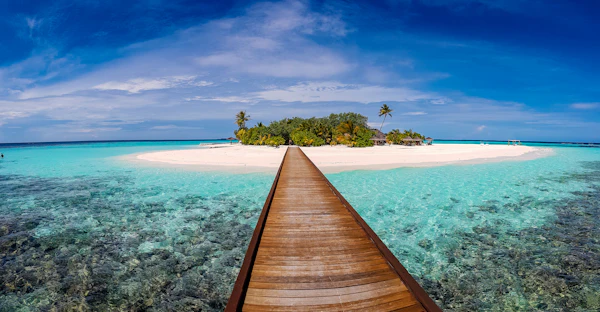
Find your island in the Philippines.
Take our quiz to find the perfect island for your nervous system.
Take the Island Quiz